Fixed Point Iteration
Source inspiration: (Mathew 2000-2019).
Animations
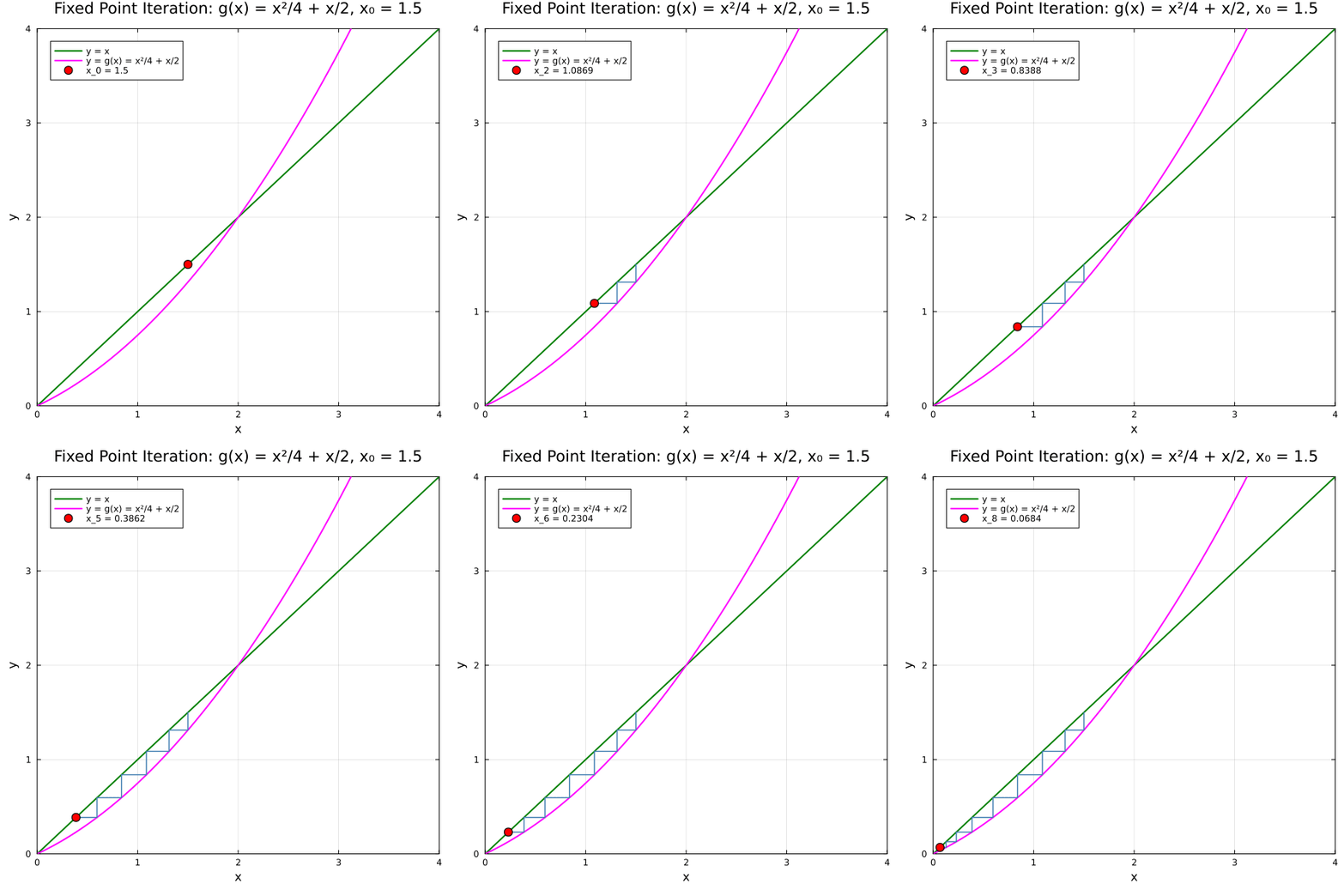
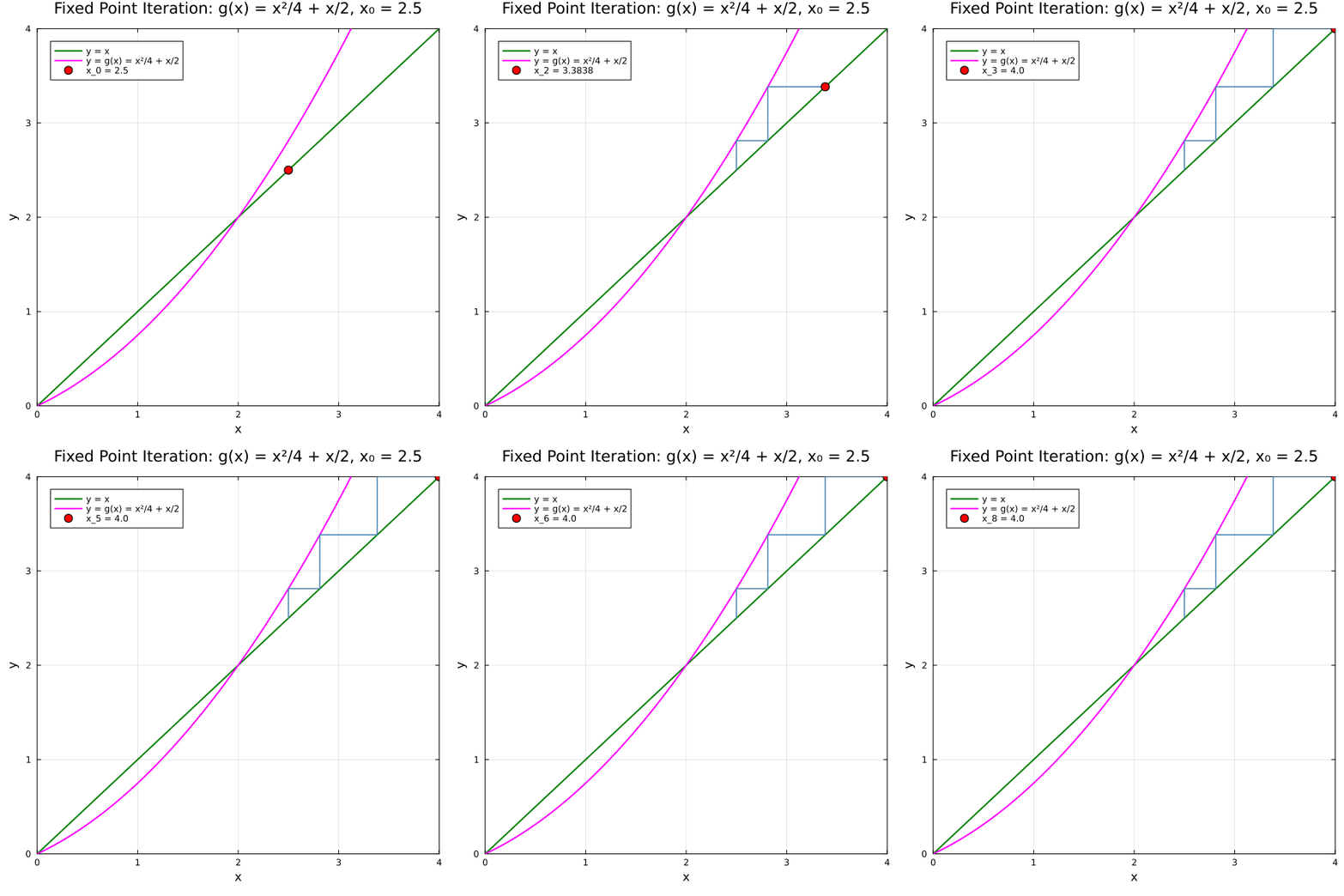
Each animation below shows the cobweb (staircase) diagram for fixed point iteration. The diagram plots two curves — the identity line \(y = x\) and the iteration function \(y = g(x)\) — then traces the staircase path: from the current iterate \(x_n\) on the diagonal, vertical to the curve to get \(g(x_n) = x_{n+1}\), then horizontal back to the diagonal. Convergence occurs when \(|g'(x^*)| < 1\).
Julia source scripts that generated these animations are linked under each case.
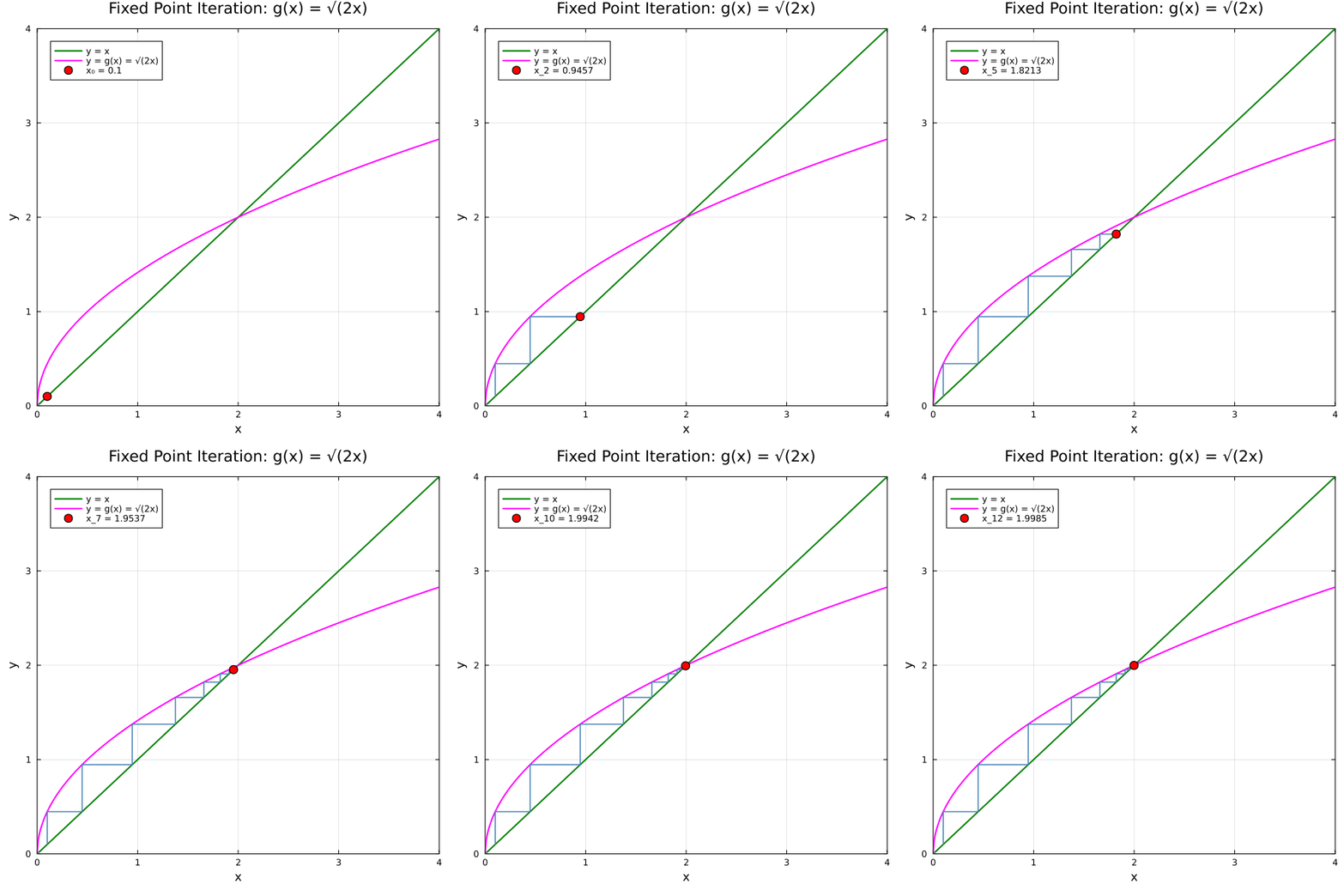
Case 1 — Convergent staircase, \(g(x) = \sqrt{2x}\), \(x_0 = 0.1\)
Behavior: The curve \(g(x) = \sqrt{2x}\) intersects \(y = x\) at \(x^* = 2\). Since \(g'(2) = \tfrac{1}{2} < 1\), iteration converges from below in a monotone staircase.
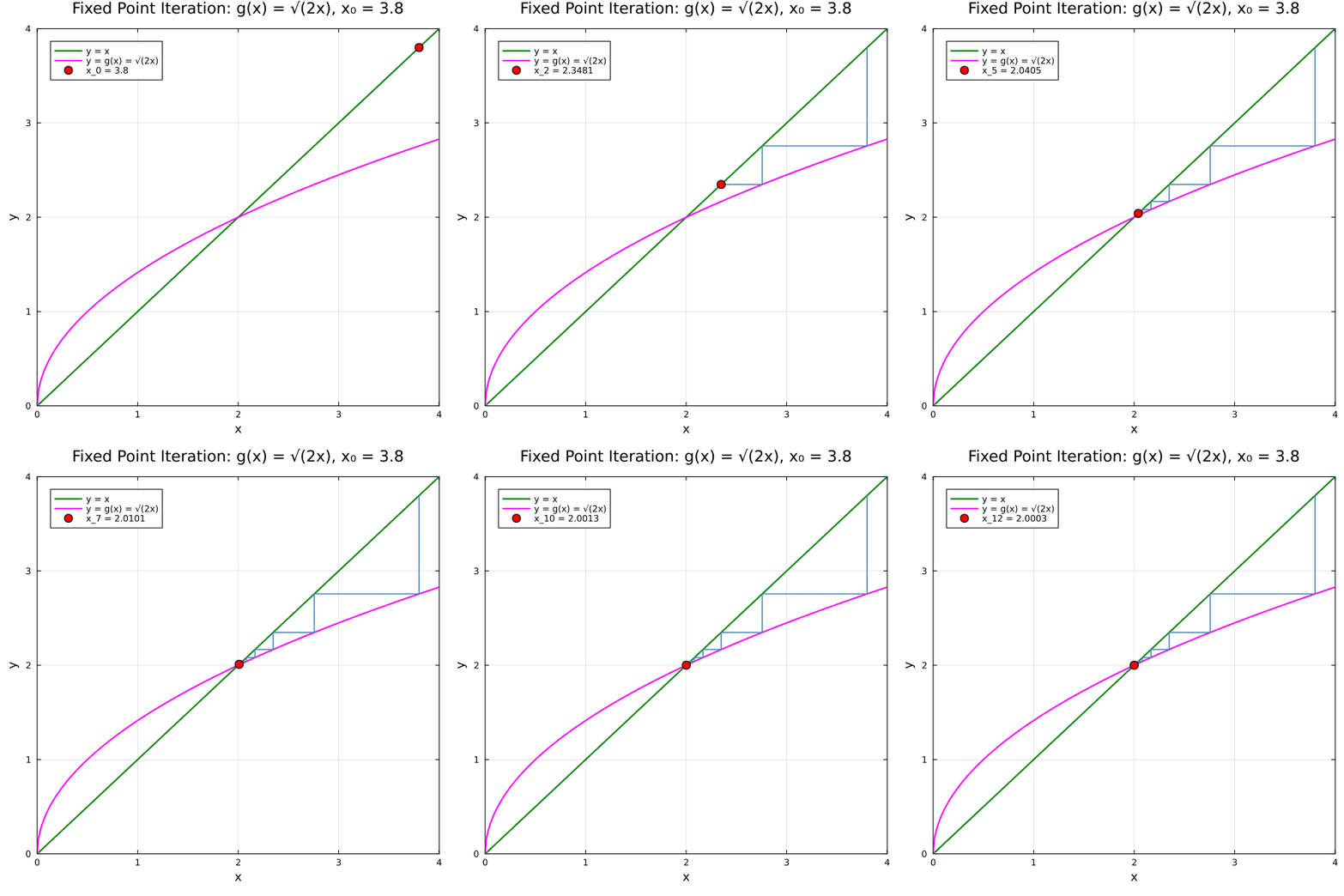
Case 2 — Convergent staircase, \(g(x) = \sqrt{2x}\), \(x_0 = 3.8\)
Behavior: Same function as Case 1 but starting above the fixed point. The staircase descends monotonically to \(x^* = 2\), confirming convergence from both sides.
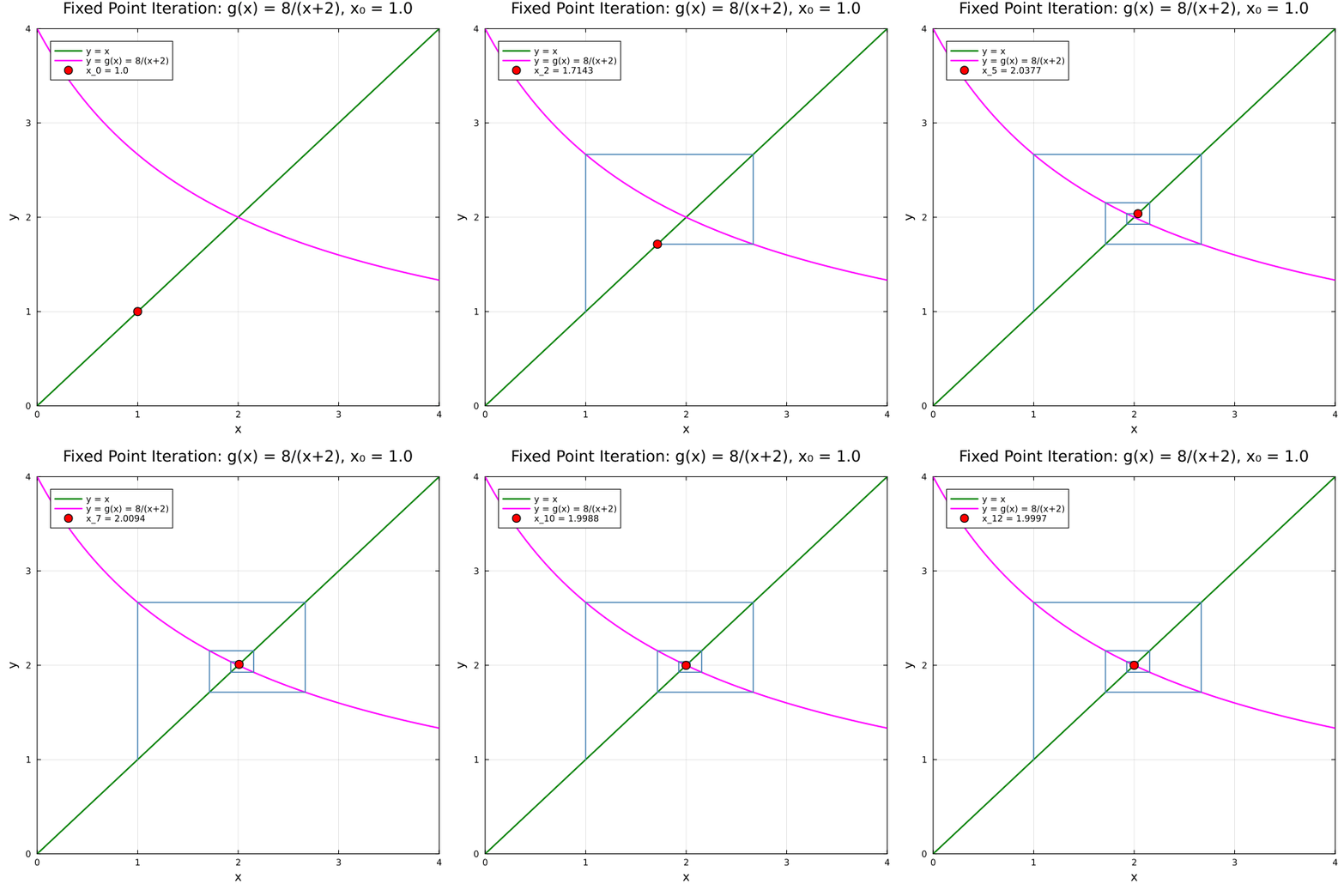
Case 3 — Oscillating convergent, \(g(x) = \tfrac{8}{x+2}\), \(x_0 = 1.0\)
Behavior: The curve \(g(x) = \tfrac{8}{x+2}\) is strictly decreasing, so \(g'(2) = -\tfrac{1}{2}\). Since \(|g'(2)| = \tfrac{1}{2} < 1\), iteration converges, but the staircase alternates sides of \(x^*\) on each step.
Case 4 — Divergent, \(g(x) = \tfrac{x^2}{4} + \tfrac{x}{2}\), \(x_0 = 1.5\)
Behavior: The curve \(g(x) = \tfrac{x^2}{4} + \tfrac{x}{2}\) is tangent to \(y = x\) at \(x^* = 2\) from below. Since \(g'(2) = \tfrac{3}{2} > 1\), the staircase walks away from the fixed point toward the left.
Case 5 — Divergent, \(g(x) = \tfrac{x^2}{4} + \tfrac{x}{2}\), \(x_0 = 2.5\)
Behavior: Same function as Case 4 but starting above the fixed point. The staircase moves monotonically rightward and diverges, showing instability from both sides.
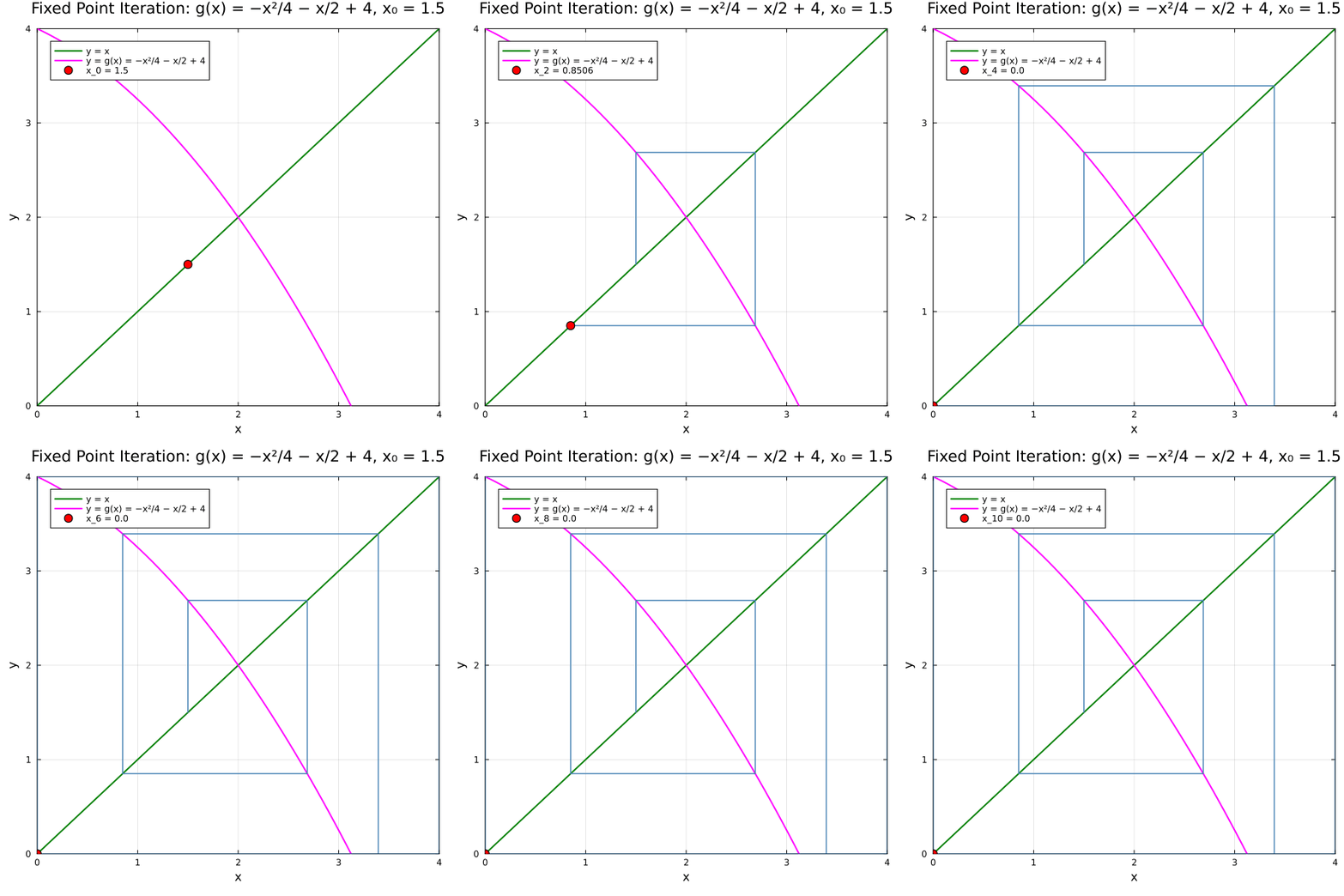
Case 6 — Oscillating divergent, \(g(x) = -\tfrac{x^2}{4} - \tfrac{x}{2} + 4\), \(x_0 = 1.5\)
Behavior: The curve \(g(x) = -\tfrac{x^2}{4} - \tfrac{x}{2} + 4\) is steeply decreasing at \(x^* = 2\). Since \(g'(2) = -\tfrac{3}{2}\) and \(|g'(2)| = \tfrac{3}{2} > 1\), iteration diverges while oscillating — the staircase spirals outward from the fixed point.